
TL;DR: The Adventurer’s Summary
Learning basic communication skills is the ultimate icebreaker. By using simple greetings, you show respect for local cultures. Focus on pronunciation, master gendered thank-yous, and always keep an offline translation tool handy for emergencies.
Stepping into a new country where Portuguese is the primary language—whether in the historic streets of Lisbon, the vibrant energy of Rio de Janeiro, or the coastal beauty of Luanda—is an exhilarating experience. However, bridge the communication gap by mastering a few portuguese phrases for travel to ensure your journey is seamless. Locals genuinely appreciate when visitors attempt to speak their language, and even a basic vocabulary will transform your trip from a surface-level visit into a deeper, more authentic cultural immersion.

Essential Portuguese phrases for travel: Communication basics
Language is the heart of travel. Before you dive into the complexities of regional dialects, you must master the fundamental pleasantries. Politeness is a core value in all Lusophone cultures. Regardless of your destination, starting every interaction with a polite greeting establishes a positive rapport.
The power of a polite greeting
In Portuguese, greetings often change based on the time of day. Use Bom dia (Good morning) until midday, Boa tarde (Good afternoon) throughout the afternoon, and Boa noite (Good evening or Good night) once the sun sets. If you feel overwhelmed by the clock, Olá is a universally accepted, friendly alternative that works in every social situation.
Gratitude is equally vital. Always remember the distinction between Obrigado (if you are male) and Obrigada (if you are female). While a minor detail to outsiders, this grammatical nuance signals cultural awareness. Never shy away from using Por favor (Please) whenever you make a request; it is the hallmark of a considerate traveler.
Linguistic nuances: European vs Brazilian Portuguese differences
One of the most frequent questions for learners is how to handle the two main dialects. European Portuguese, spoken in Portugal and parts of Africa, often features more closed, subtle vowel sounds and a rhythmic, clipped cadence. Brazilian Portuguese, by contrast, is known for its open vowels and lyrical, melodic flow.
Grammar varies slightly as well. Brazilians frequently use the informal você, while European speakers may favor more formal structures like o senhor or a senhora. If you are unsure of the appropriate level of formality, lead with the respectful o senhor/a senhora approach. It is far better to be viewed as overly polite than to be perceived as brash. For an official resource on language standards, you can review the guidelines provided by the Instituto Camões.

Volta Region Nature Tour, first, our team picks you up early at any location in Accra. Before starting the drive,…
Navigating practical challenges
Beyond social pleasantries, you need to manage logistics. Whether you are navigating a bustling transit station or settling into a remote guesthouse, these phrases will save you time and stress.
Dining and culinary etiquette
Ordering food is your chance to engage with the local culture. Start with Eu gostaria de pedir… (I would like to order…) followed by the menu item. If you have specific medical dietary requirements, stating Eu sou alérgico a… (I am allergic to…) is non-negotiable. Carry a small card with these dietary details written in the local dialect to show staff if pronunciation becomes difficult.
When you are ready to pay, ask for A conta, por favor. For those looking to go deeper into local traditions, we recommend participating in guided culinary tours to learn the history behind the ingredients. Understanding the local palate allows you to appreciate the nuance of each region.
Transportation and finding your way
Getting lost is part of the adventure, but having a way out is smart. Use Onde fica a estação? (Where is the station?) or Pode me mostrar no mapa? (Can you show me on the map?). If you need a taxi, Onde posso encontrar um táxi? (Where can I find a taxi?) is invaluable. Always have a secondary offline map application installed on your phone to supplement your verbal inquiries.
Emergencies and medical assistance
While we hope your trip is smooth, preparation for emergencies is essential. Learn Preciso de um médico (I need a doctor) and Onde é o hospital mais próximo? (Where is the nearest hospital?). In critical situations, do not be afraid to use Socorro! (Help!). It is a strong, urgent word that will immediately draw attention from anyone in the vicinity. If you are stopped by authorities, remain calm, keep your hands visible, and say Eu não falo bem português (I do not speak Portuguese well).
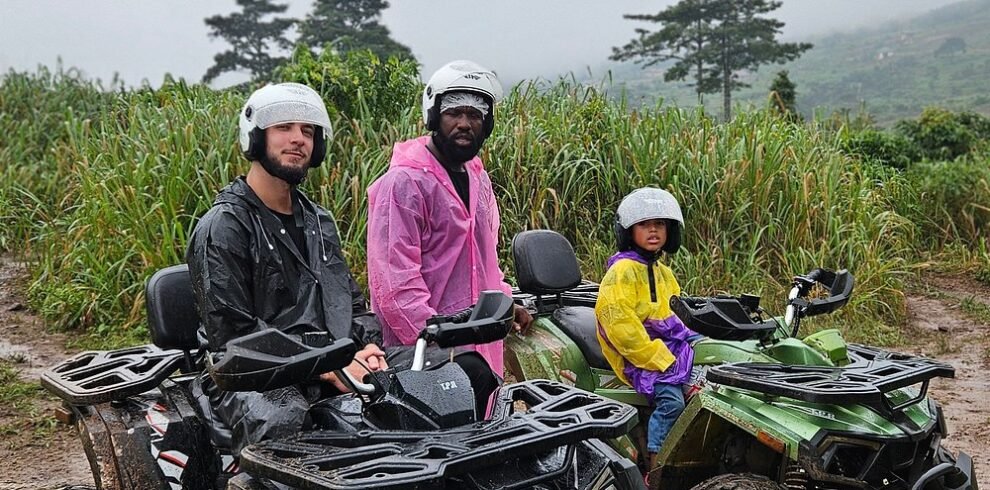
Discover ATV Quad Biking Aburi Gardens Tour | Ghana Experience Our ATV Quad Biking Aburi Gardens Tour First, start your…
Pro tips for learning and pronunciation when it comes to Portuguese phrases for travel
Pronunciation is not strictly phonetic, and regional accents matter. To improve your skills, utilize apps that provide audio feedback. Mimic the speakers to capture the nasal quality of the ã or the soft ç. If you struggle with a specific word, simply smiling and gesturing often goes a long way. Locals appreciate the effort, and your willingness to try will almost always be met with patience and kindness. Do not fear mistakes; they are the best part of the learning process.

Frequently Asked Questions (FAQ) for Portuguese phrases for travel
In major tourist centers, you can often get by with English. However, learning even a few key phrases will drastically improve your experience in smaller towns and create warmer interactions with locals.
When in doubt, use formal address (o senhor/a senhora). It is always safer to be respectful. You can move to informal address once a local uses your first name or invites you to do so.
They are different but mutually intelligible. Most speakers can understand each other easily, though you may notice differences in accent and certain words for everyday items, much like British versus American English.
It is perfectly acceptable to say Pode repetir, por favor? (Can you repeat, please?) or Fale mais devagar, por favor (Speak more slowly, please). People will almost always accommodate a polite request.
The secret is practice and listening. Listen to native music or podcasts and try to hum the nasal sounds while keeping your mouth relatively closed. You do not need a perfect accent; clarity and enthusiasm are more important than sounding like a native speaker.